

If your home was built before the 1980s, there’s a real chance your roof contains asbestos. Asbestos was once praised for its fire resistance, strength, and insulation qualities, which made it a go-to material in roofing products.
However, decades later, we now know the serious health risks it poses. When disturbed, asbestos fibers can become airborne, and if inhaled, they can cause serious respiratory diseases, including mesothelioma, asbestosis, and lung cancer. This makes roof replacement in older homes not just a structural issue, but a potential health hazard.
At American Remodeling, we have been helping homeowners of Eastern and Central PA with roofing for over four decades. During this time, we’ve seen many cases where people unknowingly risked their health while replacing a roof.
For this reason, in this article, we’ll try to help you understand how to spot the warning signs of asbestos and everything related to the topic.
How Bad Is Asbestos Roofing for Your Health?
If your roof contains asbestos and it begins to deteriorate or is improperly handled, it can release microscopic asbestos fibers into the air. It can create a lot of complications. In this section, we’ll talk about the health risks of asbestos roofing.
- Inhalation Risks: When asbestos fibers become airborne and are inhaled, they don’t break down inside the body. Over time, even a small amount of exposure can cause serious respiratory problems. This is especially dangerous for those who work around asbestos frequently, such as roofers or DIY homeowners, unaware of the risks.
- Asbestosis: Prolonged exposure to asbestos fibers can lead to asbestosis, a chronic lung disease caused by scarred lung tissue. Symptoms include shortness of breath, persistent coughing, and chest pain. It is progressive, irreversible, and can severely impact quality of life.
- Lung Cancer: Asbestos exposure significantly increases the risk of lung cancer, particularly in smokers. It is one of the most common asbestos-related illnesses and may take decades to develop after initial exposure. Often, symptoms only appear when the disease has advanced, making it difficult to treat.
- Mesothelioma : This rare and aggressive cancer affects the lining of the lungs, chest cavity, or abdomen and is almost exclusively linked to asbestos exposure. Unfortunately, mesothelioma is often diagnosed at a late stage and has a poor prognosis, making prevention and early identification of asbestos critical.
- Secondary Exposure Risks: It’s not just those who directly work with asbestos who are at risk. Family members can also be affected by secondary exposure . For example, if someone unknowingly brings asbestos fibers home on their clothes or tools.
That’s why it’s important to identify potential asbestos roofs and hire professionals who follow proper decontamination procedures.
How to Recognize Potential Asbestos Roofs?
Identifying whether your roof contains asbestos starts with understanding your home’s age and the materials used in its construction.
As mentioned earlier, homes built before the 1980s (Particularly between the 1940s and late 1970s) are at higher risk of having asbestos-containing roofing products.
These include corrugated cement sheets, cement-asbestos shingles, and bituminous felts. The visual cues alone, however, aren’t always enough to confirm the presence of asbestos.
Corrugated roofing sheets made from asbestos-cement are usually gray and rigid with a slightly chalky texture. Asphalt-based roofing felts and mastics, used for waterproofing, often contain asbestos fibers mixed in to improve strength and heat resistance.
These can be present beneath shingles or in flat-roof underlayment systems. Over time, wear and tear can make these components more brittle and dangerous.
In short, asbestos can’t be reliably confirmed by sight, and for that reason, any suspicion should be treated seriously. If you’re unsure, do not attempt to remove or disturb the material.
A certified asbestos inspector can take a proper sample and send it to a lab for analysis. Testing is the only safe and legal way to confirm the presence of asbestos before beginning any roof replacement work.
What to Do If Your Roof Contains Asbestos?
If a certified professional confirms the presence of asbestos in your roofing, it’s essential to act carefully and responsibly. In this section, we present a step-by-step breakdown of what you should do next if you find asbestos in your roof.
Stay Calm and Avoid Disturbing the Material
Your first instinct might be to start removing the roof, but that can be dangerous. Asbestos-containing materials are most harmful when disturbed, as they release microscopic fibers into the air.
These can be inhaled and lead to serious health issues like mesothelioma or lung cancer. So, do not attempt to clean, scrape, or cut into the roof. Just stay calm and don’t take any rash decisions.
Understand the Condition and Risk Level
Not all asbestos-containing materials are equally dangerous. Ask the inspector for a clear assessment of the material’s condition. If the roof is still intact and the asbestos is non-friable, it may not pose an immediate hazard. In such cases, you might have the option to safely leave it undisturbed under regular monitoring.
Explore Your Management Options
Once you’ve assessed the condition, you’ll need to choose how to deal with it. The three most common approaches are:
- Encapsulation : Applying a protective sealant that binds asbestos fibers and prevents them from becoming airborne.
- Enclosure : Installing a barrier (like a new roofing layer) to contain the asbestos.
- Full Removal : Completely removing the asbestos materials.
Hire a Licensed Asbestos Abatement Contractor
Asbestos removal is not a DIY job. Always hire a licensed, insured contractor who specializes in asbestos abatement. They follow strict safety procedures and local regulations to ensure that the removal is safe for you, your family, and your neighbors. Don’t forget to ask for their credentials and check whether they handle cleanup and disposal.
Hiring a professional to handle asbestos in your roof is the ultimate thing to do. After calling the pros, there’s not much left for you to do. All that is left is to replace your old roof with a safe one.
Safe Replacement Options and Alternatives
Once asbestos is confirmed in your roof and you’re planning a replacement, choosing a safe, durable, and cost-effective alternative becomes essential. Here are some of the best options homeowners can consider.
- Metal Roofing: Metal roofing is one of the most popular asbestos roof replacements due to its longevity and safety. Made from materials like steel or aluminum, it’s completely asbestos-free and backed by a 100% lifetime warranty. It’s lightweight, highly durable against storms and fire, and requires little maintenance. Plus, it reflects heat, helping to lower cooling bills.
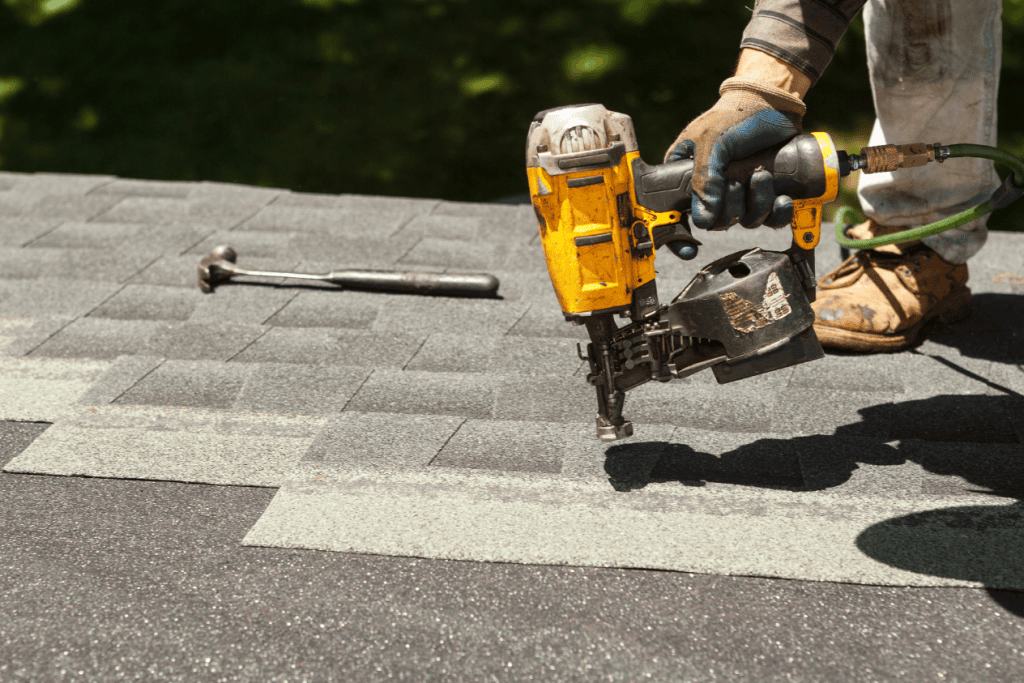
- Asphalt Shingles: Asphalt shingles are affordable and widely used in residential roofing across the U.S. Modern variants use fiberglass bases, not asbestos, and offer good durability depending on climate and quality. They’re easy to install, repair, and replace. If you’re working within a tight budget or need a quick installation, asphalt shingles are a practical, safe bet. They’re also available in various textures and colors, allowing flexibility in your home’s appearance.
- Tilcor Stone-Coated Steel: For owners looking to combine the beauty of traditional roofing with the durability of steel, Tilcor stone-coated steel is a premium option. It’s ideal for replacing asbestos roofing on buildings where appearance matters, such as community centers, churches, or custom homes.
Why DIY is Always a Bad Option in Asbestos Roofing?
Taking the DIY route for asbestos roof removal is not only risky, it’s outright dangerous. While it may seem like a way to save money, disturbing asbestos materials without proper training and equipment can release toxic fibers into the air. As discussed earlier, it can put your health and the health of those around you at serious risk.
Inhaling these microscopic fibers can lead to severe illnesses like lung cancer, mesothelioma, and asbestosis, often years after exposure. Beyond the health risks, there are strict laws regulating the handling and disposal of asbestos in many areas.
In some regions, it’s illegal for unlicensed individuals to even attempt removal. Violating these laws can result in hefty fines or legal consequences. Additionally, asbestos waste must be disposed of at approved facilities following specific guidelines, something most DIYers aren’t equipped to handle.
For your safety and legal protection, asbestos roof removal should always be left to certified professionals who know how to manage the material without endangering lives.
Frequently Asked Questions
1. Can asbestos in the roof affect indoor air quality even if it’s not disturbed?
Not typically, but it depends on the condition. If your roof is intact and sealed, asbestos fibers remain locked in and don’t pose a threat. However, if the roofing is brittle, cracked, or weather-worn, microscopic fibers can be released and infiltrate your attic or HVAC system.
2. Can I paint over asbestos roofing to seal it?
Only if done professionally. Specialized encapsulating coatings can lock in fibers, preventing exposure. However, using regular paints or doing it yourself can cause disturbance and release particles. Always consult asbestos-certified contractors before applying anything to the surface.
3. Do solar panel installations disturb asbestos roofs?
Absolutely. Drilling, screwing, or mounting brackets directly into asbestos cement sheets breaks the surface and releases harmful fibers. A pre-installation asbestos survey is essential, and alternative mounting solutions or roof replacement should be considered to avoid exposure.
4. Is it safe to enter an attic beneath an asbestos roof?
It depends. If the roof is in good condition, entering your attic is generally safe. But if the underside of the roof is exposed, flaking, or releasing dust, even walking around can disturb fibers. Wearing a mask and avoiding disturbance is crucial until professionals assess it.
6. Can I sell my house if it has an asbestos roof?
Yes, but full disclosure is mandatory in most states. Some buyers may negotiate the price down or request removal before closing, but others may accept it if it’s well-maintained. Getting a certified asbestos inspection helps you prepare for buyer concerns ahead of time.
7. How long does professional asbestos roof removal typically take
Most removals are completed in 1 to 5 days, depending on size, structure, and accessibility. Certified crews follow strict safety and environmental guidelines, including sealing the area, removing materials without breakage, and conducting final air clearance tests for complete safety.
The Final Words
Dealing with an asbestos roof isn’t just a home improvement task. It’s a health and safety priority. For that reason, as a trusted roofing and home improvement company in eastern and central PA since 1982, we decided to help homeowners understand everything about asbestos.
In this article, we began by introducing asbestos as a hazardous material, outlining the serious health risks it poses, and explaining how to identify roofing that may contain asbestos. We then guided you through the essential steps to take if asbestos is found on your roof. To round things off, we shared safe and effective alternative roofing options and answered some important, less commonly discussed questions.