
If your home in Schuylkill County was built before 1978, there’s a good chance your old windows were painted with lead-based paint. For a lot of homeowners in the area, that’s not news — but what is surprising is how often those same windows are still in place, slowly deteriorating, and creating a hazard that only gets worse over time. At American Remodeling, we’ve been helping Pennsylvania homeowners solve exactly this problem since 1982. As a family-owned and operated company with industry-leading warranties, we know that when it comes to lead paint and aging windows, there’s only one fix that actually lasts: full window replacement.
Why Lead Paint and Old Windows Are a Problem That Won’t Go Away
Lead paint doesn’t become dangerous the moment it’s on your walls or window frames. The real risk starts when it begins to break down. Old windows flex, stick, warp, and rub against their frames constantly — and every time that happens, painted surfaces wear against each other and create fine dust.
That dust is where the danger lives. Lead paint dust is invisible and nearly odorless, but it settles on surfaces, gets tracked through the house, and is especially harmful to children under six and pregnant women. In a home where windows are opened and closed daily, that friction is happening all the time.
Patching or repainting over old lead paint might reduce exposure temporarily, but it doesn’t address the underlying problem: the window itself is still there, still deteriorating, and still a source of hazard every time it moves.
What Makes Schuylkill County Homes Particularly Vulnerable
Schuylkill County has some of the oldest housing stock in Pennsylvania as much of it was built up largely during the coal region’s boom years — most of that construction happened well before lead paint was banned in residential use.
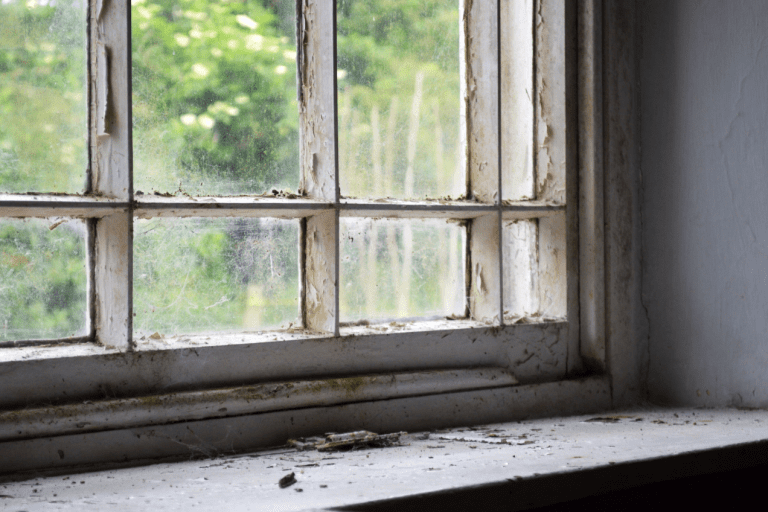
That age, combined with the area’s cold winters and high humidity seasons, accelerates the wear on old wooden window frames. Here’s what that deterioration typically looks like in homes across the region:
- Paint that’s chipping, flaking, or peeling around the sill and frame
- Windows that stick in summer and rattle in winter due to frame warping
- Visible gaps or cracks where the frame meets the wall
- Soft or spongy wood around the frame edges from moisture damage
- Drafts you can feel even when the window is fully closed
If you’re not sure what your home contains, the Pennsylvania Department of Health maintains a lead testing and inspection program, and Schuylkill County residents can also reach out to local health offices for guidance on certified lead inspectors in the area.
Why Encapsulation and Repair Are Temporary Fixes at Best
A lot of homeowners ask about encapsulation — coating old lead paint with a special sealant — as a lower-cost option. It can work in certain situations, but windows are one of the worst candidates for it.
Here’s why: encapsulants work by forming a barrier over the lead paint. But windows are high-friction surfaces. Every time the window opens or closes, that barrier breaks down. On doors, trim, and baseboards, encapsulation can be a reasonable interim measure. On operable windows, it’s a short-term solution that tends to require frequent upkeep and still carries residual risk.
The same logic applies to window repairs that preserve the existing frame. If the frame itself contains lead paint and continues to be used, the friction and wear continue too.
Full Replacement: Why It’s the Only Permanent Answer
Removing the window — frame, sash, and all — eliminates the lead paint source entirely. Once the old unit is gone and properly disposed of by a certified contractor, the hazard goes with it.
New replacement windows installed by American Remodeling are installed to current standards and contain no lead-based materials. Beyond eliminating the health hazard, homeowners in Schuylkill County consistently notice several practical improvements after replacement:
- Noticeably warmer rooms in winter with no cold drafts near window areas
- Reduced outside noise from better-sealed frames
- Windows that open, close, and lock the way they’re supposed to
- No more annual scraping, repainting, or re-caulking around deteriorating wood frames
- Peace of mind that the lead paint source has been fully removed
What the Replacement Process Looks Like
When lead paint is involved, window replacement requires more careful handling than a standard installation. The work should be performed by a contractor trained in lead-safe work practices, following EPA RRP (Renovation, Repair, and Painting) guidelines. In practical terms, that means:
- Containing the work area before any removal begins to prevent dust from spreading
- Using proper removal techniques that minimize paint disturbance
- Cleaning up thoroughly using methods that capture lead dust rather than just move it around
- Disposing of old materials according to Pennsylvania and EPA requirements
For Schuylkill County homeowners, it’s worth knowing that Pennsylvania has its own lead-safe certification requirements for contractors in addition to federal standards. When you’re choosing someone for this work, asking about RRP certification and experience with lead-containing materials is a reasonable and important question.
How to Tell If Your Windows Contain Lead Paint
Not every old window is a confirmed hazard, but if your home was built before 1978, it’s reasonable to assume lead paint is present until you know otherwise. Here are the most reliable ways to find out:
- Home test kits — Available at hardware stores, these swab-based kits can detect the presence of lead on painted surfaces. They’re inexpensive and easy to use, but they don’t tell you the concentration or condition of the paint.
- Certified lead inspector — A licensed inspector can test your windows and give you a full picture of where lead paint is present and whether it’s in a deteriorated condition. This is the most thorough option, especially if you’re planning a renovation.
- XRF testing — Some inspectors use X-ray fluorescence devices that can detect lead without disturbing the paint surface at all. This is the preferred method for comprehensive testing.
- Assume and act accordingly — If your home is old enough and you’re already seeing deterioration around window frames, many contractors and health professionals recommend treating it as lead-containing until proven otherwise, especially if children live in the home.
The Pennsylvania Department of Health has a directory of certified lead inspectors and risk assessors if you’d like a professional evaluation before deciding on next steps.
Financial Assistance Available to Schuylkill County Homeowners
The cost of window replacement can feel like a barrier, but there are programs designed specifically to help:
- Weatherization Assistance Program — Schuylkill County participates in federally funded weatherization programs through local Community Action agencies, which sometimes cover window work when health and safety issues are involved
- Lead Hazard Reduction Grant Programs — Federal HUD funding periodically flows to counties like Schuylkill for lead remediation work in qualifying homes
- Local housing rehabilitation programs — The county’s housing office occasionally administers repair assistance programs for income-qualifying homeowners
Reaching out to Schuylkill Community Action or the county housing office is a good starting point before committing to a full project.
Talk to American Remodeling About Your Schuylkill County Home
If you have older windows in your Schuylkill County home and you’re concerned about lead paint, the best first step is a conversation with someone who knows what to look for. Since 1982, we have served homeowners throughout Pennsylvania, including Schuylkill County and the surrounding areas. Our approach is straightforward: provide honest assessments, fair pricing, and quality workmanship backed by real warranties.
Request your free estimate online or call 888-739-7339 to schedule a consultation at your convenience. We look forward to earning your business the right way.