
Winter in Schuylkill County, PA is no joke. Between heavy snow, ice storms, and the freeze-thaw cycles that hit our area year after year, your roof takes a beating from December through March. By the time spring rolls around, even a roof that looked fine in November might have problems you can’t see from the ground. That’s where American Remodeling comes in. As a family-owned and operated roof replacement company that has served Pennsylvania homeowners for decades, we know what winters do to local roofs. This guide walks you through what to look for after the snow melts, so you can catch small issues before they turn into the kind of damage that leaves you calling about a full roof replacement in the middle of a summer thunderstorm.
Start with a Look from the Ground
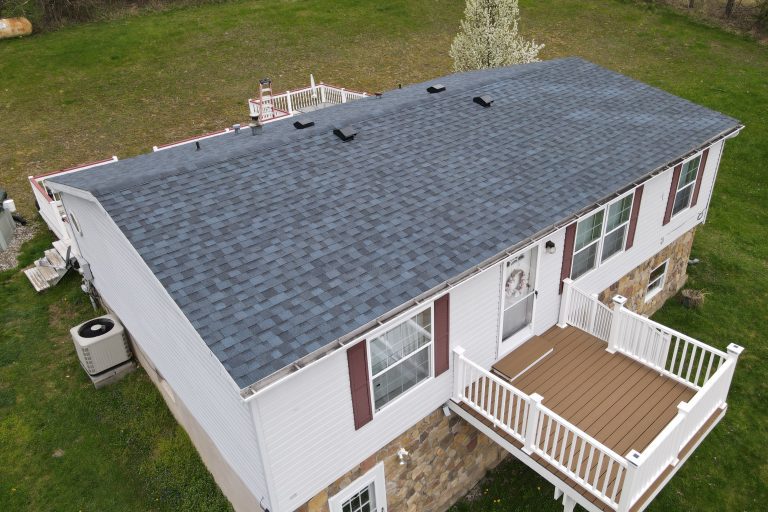
Before climbing anywhere or hiring anyone, walk around the outside of your house on a clear day. You’re looking for anything that seems off compared to last fall. From the yard or driveway, scan the roof for:
- Shingles missing along the edges or in the middle of a slope
- Sections that look darker, wavy, or sunken
- Strips of shingles that are lighter in color than the rest (a sign the protective granules washed off)
- Shingles that look curled at the corners or lifted at the bottom edge
- Debris caught in valleys or piled against vents and chimneys
Pay extra attention to the side of your roof that faces the prevailing wind. In most of Schuylkill County, that’s the north and west sides, where storms blow in off the ridges. Those slopes almost always show wear first, and they’re often the part of the roof that pushes a homeowner toward replacement long before the rest gives up.
Look for Signs of Ice Dam Damage
Ice dams are one of the most common winter roof problems in our part of Pennsylvania. They form when snow on the upper part of the roof melts, runs down toward the eaves, and refreezes where the roof is colder. Over time, that ridge of ice traps water behind it, and the water has to go somewhere. Often, it goes under the shingles and into the house.
Even if you didn’t see icicles this winter, you might still have damage. Walk the perimeter of your home and look for:
- Curled, loose, or lifted shingles along the lower edge of the roof
- Stains or peeling paint on the soffits (the underside of the roof overhang)
- Sagging or soft spots in the soffit material
- Water spots on interior ceilings or around windows that showed up during the thaw
- Discoloration on the fascia boards (the trim that runs along the gutter line)
If you’re seeing more than one or two of these, ice dams probably did real damage this winter, and the roof itself needs a closer look from a professional.
Check the Flashing Around Chimneys, Vents, and Skylights
Flashing is the metal that seals the joints where your roof meets something else, like a chimney, a plumbing vent, or a skylight. Winter is hard on flashing because ice expands into every gap and wind pries at anything loose. After a rough season, flashing can pull away from the roof or develop cracks where water can sneak in.
A lot of older homes in places like Pottsville, Tamaqua, and Schuylkill Haven have brick chimneys, and the seals around them are often the first place a roof starts to leak. From the ground, look for:
- Rust streaks running down from the chimney or vents
- Visible gaps between the metal flashing and the surrounding shingles
- Flashing that has bent up, peeled back, or separated from the wall
- Crumbling mortar or missing caulk around the chimney base
- Dark staining on the siding directly below a flashed area
These small issues are often what pushes a borderline roof toward needing replacement instead of a patch.
Watch for Sagging or Soft Spots
A roof that has held up for years can still develop weak spots after a winter with heavy, wet snow. Stand back across the street or yard and study the roofline. It should be straight from end to end. Watch for:
- Any dip, wave, or visible sag along the ridge or eaves
- Slopes that look like they’re curving downward instead of running flat
- Areas where shingles have shifted out of their rows
- Spots that look slightly lower than the surrounding roof
Sagging usually means moisture has gotten into the wood underneath and the structure is starting to give. This is one of the most serious issues a homeowner can find, and it’s almost always a job for a full roof replacement rather than a repair.
Don’t Skip the Gutters and Downspouts
Your gutters tell you a lot about the condition of your roof. After winter, take a look at what’s collected inside them and how the system itself is holding up. You’re checking for:
- Piles of small dark granules that look like coarse sand (shingle material wearing off)
- Gutters that have pulled away from the fascia or are sagging in the middle
- Bent, dented, or cracked sections from the weight of ice
- Downspouts that are loose, separated, or pointed away from the foundation
- Standing water or rust spots inside the gutter trough
Loose gutters dump water right against your foundation, which causes a whole new set of problems. Schuylkill County homes, especially the older row homes in towns like Shenandoah and Mahanoy City, often have gutters that have been through more than one harsh winter, and it shows.
Take a Look in the Attic
You don’t need to do anything fancy here. On a sunny afternoon, head up with a flashlight and look around. Pay attention to:
- Daylight coming through the roof boards (a clear sign of a hole or gap)
- Dark stains, streaks, or discoloration on the underside of the wood
- Damp, matted, or stained insulation
- A musty smell, especially after a recent rain
- Frost or condensation on nails poking through the roof deck
- Warm, humid air that feels stuck or trapped
Poor ventilation is a big reason roofs in Pennsylvania wear out before they should. When warm air gets trapped under the roof in winter, it speeds up freeze-thaw damage on the outside. If your attic feels like a sauna in the summer or a damp cave in the winter, your roof is probably aging faster than it needs to, and replacement may come sooner than you’d expect.
Why Schuylkill County Winters Are Especially Tough on Roofs
It helps to understand why our region is harder on roofs than many other parts of the country. A few things stack up against local homeowners:
- Schuylkill County sits in the ridge-and-valley section of the Appalachians, which brings strong winds and exposure on hilltop properties
- Our winters cycle through snow, thaw, rain, and hard freeze on a near-weekly basis, which is brutal on shingles and seals
- Many homes in Pottsville, Frackville, Minersville, and the surrounding boroughs were built during the coal era and have been through more than a hundred winters
- Older roof structures often have outdated ventilation that traps moisture and accelerates wear
- Heavy spring storms tend to expose any weakness left behind by the winter before
That’s why we tell homeowners across Schuylkill County not to wait until they see water on the ceiling. By that point, a repair often isn’t enough.
When It’s Time to Think About Roof Replacement
If your spring check turns up just one or two minor issues, a focused repair might be all you need. But if you’re seeing a stack of warning signs, it’s worth having a real conversation about roof replacement. Strong indicators that replacement makes more sense than another patch include:
- Sagging anywhere along the roofline
- Widespread granule loss across multiple slopes
- Leaks that keep coming back in the same spot, or showing up in new spots
- Flashing that has failed around more than one chimney, vent, or skylight
- Visible daylight or active moisture in the attic
A new roof also gives you a chance to fix the things that wore out the old one, like poor ventilation, undersized gutters, or flashing that was never installed correctly to begin with. We see all of that on a regular basis in Schuylkill County, and we plan around it from the start.
Talk to American Remodeling About Your Roof
If you notice these warning signs on your roof this spring, you might need a replacement. Don’t wait until the damage on your roof affects other parts of your house! American Remodeling has been helping homeowners across Schuylkill County and the wider Pennsylvania region protect their homes for decades, and we can give you a free estimate today.
American Remodeling – 57 St James St. Schuylkill Haven, PA 17972 Phone: (888) 739-7339